Biophilic Design Ideas for Modern Homes in 2026
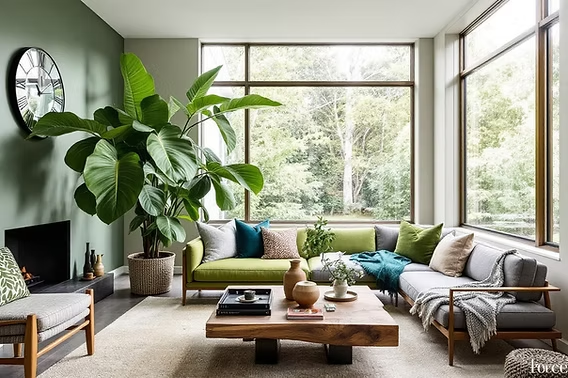
Ever noticed how you just breathe easier walking into a home full of plants and natural light, compared to one lined wall-to-wall with concrete and glass? That’s not a coincidence, and it’s not just aesthetics either. Biophilic design ideas are built around a simple premise — humans are wired to feel better around nature, and homes designed with that in mind genuinely feel calmer to live in.
A lot of people hear “biophilic design” and picture an Instagram jungle apartment with forty plants crammed onto one shelf. That’s part of it, sure, but it’s a much bigger idea than just plant collecting. It includes light, materials, air, even the sounds and views from your window. In 2026, with more people working from home and spending far more hours indoors than a decade ago, biophilic design ideas have moved from niche architecture talk into something regular homeowners are actually asking about.
What Biophilic Design Actually Means
Featured answer: Biophilic design is an approach to architecture and interiors that deliberately incorporates natural elements — plants, natural light, organic materials, water, and views of nature — to improve wellbeing, reduce stress, and reconnect indoor spaces with the natural world.
It’s not just decoration. Studies on hospital recovery rates, office productivity, even classroom focus, have found real, measurable benefits when natural elements are present. I’m not going to pretend every claim in that research is bulletproof, but the core idea holds up pretty well in my own experience — a well-lit, plant-filled room just feels different to sit in.
The term itself comes from biologist E.O. Wilson’s idea that humans have an innate connection to nature, called “biophilia.” Sounds academic, but the practical version is much simpler than it sounds.
Bringing More Natural Light Into Your Home
Featured answer: Maximise natural light by using sheer curtains instead of heavy drapes, positioning mirrors to reflect daylight deeper into rooms, keeping windows unobstructed by furniture, and choosing lighter wall colours that bounce available light rather than absorbing it.
Indian homes, especially in cities, often have one small window doing all the work for an entire room. Has this ever happened to you — you walk into a flat during the day and still need the lights on? That’s a light problem worth solving before anything else on this list.
[link to related guide on choosing the right paint finish here]
Trim back anything blocking a window from outside too, if you’ve got a balcony garden. Overgrown plants right outside a window can actually reduce the very light you’re trying to let in.
Choosing Plants That Actually Survive Indian Homes
I’ve killed more money’s worth of plants than I’d like to admit, so take this section seriously.
- Money plant (pothos) — nearly indestructible, tolerates low light, great for beginners
- Snake plant — thrives on neglect, purifies air, doesn’t mind a missed watering or three
- Areca palm — bigger statement piece, needs decent indirect light but not much fuss otherwise
- Peace lily — flowers indoors, likes humidity, works well in bathrooms with a window
- ZZ plant — genuinely almost impossible to kill, perfect for anyone who travels often
Don’t go buy fifteen plants on day one. Start with two or three that suit your light conditions, see how they do for a month, then expand.
Natural Materials Over Synthetic Ones
Swap what you can, gradually — this doesn’t need to happen overnight or drain your savings.
- Wooden furniture instead of plastic or heavily laminated pieces
- Cane, jute, and rattan for baskets, lampshades, and light furniture
- Stone or clay planters instead of plastic ones
- Cotton and linen textiles rather than synthetic blends, which also breathe better in Indian heat
Water Elements and the Sound of Nature
A small tabletop fountain sounds almost cliché, but there’s genuine research behind ambient natural sound reducing stress. You don’t need a whole indoor pond — even a small ₹800-1,500 tabletop fountain in a living room corner adds a calming background sound most people don’t consciously notice but do feel.
Picture a small business owner in Jaipur who added a small fountain and a cluster of plants near the reception of their office. Clients regularly commented the waiting area felt “peaceful” — nobody could quite say why, but the water sound and greenery were doing quiet work in the background.
Views and Visual Connection to Nature
If you’re lucky enough to have a balcony or a decent window view, arrange your seating to actually face it. Sounds obvious, but I’ve been in so many homes where the sofa faces a blank wall or the TV, with a lovely little balcony garden completely ignored behind it.
Even without a great outdoor view, a large botanical print or a wall of framed leaf pressings can offer a visual nature cue indoors. It’s not a full substitute, but it genuinely helps.
[link to related guide on small living room decorating ideas here]
Budget-Friendly Biophilic Design Ideas
You really don’t need a big renovation for this. Some of the most effective biophilic design ideas cost next to nothing:
- Rearranging furniture to face a window or balcony
- Adding two or three low-maintenance plants (₹100-300 each at most local nurseries)
- Switching one set of curtains for sheer, light-filtering ones
- Bringing in a jute rug or cane basket instead of a plastic equivalent
FAQ: Common Questions About Biophilic Design
What is biophilic design in simple terms? It’s designing indoor spaces to include natural elements — plants, light, natural materials, water, views — because humans generally feel calmer and function better around nature.
Do I need a garden or balcony for biophilic design to work? No, though it helps. Indoor plants, natural materials, better light management, and even nature-themed art can bring meaningful biophilic elements into a flat with no outdoor space at all.
Which plants are best for low-light Indian apartments? Snake plant, ZZ plant, and pothos (money plant) are the most forgiving for low-light, low-maintenance situations and are widely available at Indian nurseries.
Is biophilic design expensive to implement? Not necessarily — starting with a couple of plants, better light management, and swapping some plastic decor for natural materials costs very little compared to a full renovation.
Does biophilic design actually reduce stress? Research on this is genuinely fairly strong — studies link natural light, greenery, and nature views to lower stress markers and better focus, though results vary person to person.
Can biophilic design work in a home office setup? Yes, and it’s honestly one of the best places for it — a plant near your desk, good natural light, and a view outside (even a small one) can noticeably improve focus during long work-from-home days.
[link to related guide on decorating on a tight budget here]
Wrapping It Up
Biophilic design isn’t a rigid style you need to nail perfectly — it’s a handful of small, deliberate choices: more daylight, a few hardy plants, natural materials where you can afford them, maybe the sound of water in one corner. None of it needs to happen at once.
Start with the easiest win — move your favourite chair closer to a window, or bring home two plants this weekend that actually suit your light. See how the room feels after a couple of weeks before deciding what to add next.