How to Childproof Your Home for Safety in 2026
How to Childproof Your Home for Safety
The first time your baby starts crawling, you suddenly see your house completely differently. That coffee table corner? Suddenly a hazard. Those outlets you’ve walked past for years? Now at exactly eye level for someone determined to explore them. Learning how to childproof home spaces properly is less about buying every gadget on the shelf and more about seeing your house through a toddler’s eyes.
I’ve noticed a lot of parents overspend on elaborate childproofing kits before ever thinking through what their actual layout needs. A house with stairs needs different priorities than a single-story apartment. Let’s go through this room by room, starting with what genuinely matters most.
Why Childproofing Your Home Matters More Than You’d Think
Quick answer: Most childhood home injuries happen from predictable, preventable sources — falls, choking hazards, and accidental poisoning — which means a properly childproofed home addresses the same handful of risks over and over, not an endless list of unlikely dangers.
Here’s a number that tends to surprise new parents: falls are among the leading causes of injury in young children, and most of them happen at home, not outside. Stairs, furniture, and open windows do most of the damage.
The good news is that childproofing doesn’t require paranoia. It requires attention to a fairly short, predictable list of risks, tackled room by room, rather than trying to eliminate every conceivable danger at once.
Kitchen Safety: The Highest-Risk Room in the House
Kitchens combine sharp objects, heat, chemicals, and small objects — basically everything you don’t want near a curious toddler, all in one room.
Priority fixes:
- Install stove knob covers, since kids love turning things
- Use back burners when cooking, turning pot handles inward
- Lock cabinets containing cleaning supplies, not just decorative latches — actual child-safety locks
- Store knives and small appliances out of reach, not just out of sight
- Keep a fire extinguisher accessible but out of a child’s reach
Picture a busy morning, breakfast cooking, phone buzzing, and a toddler pulling at a cabinet door below the sink. That’s exactly the scenario cabinet locks are designed for — not a hypothetical, but a genuinely common moment in most households with young kids.
Bathroom Safety Essentials
Quick answer: Bathroom safety for a childproof home centers on three things — water temperature, medication storage, and slip prevention — since drowning risk, accidental ingestion, and falls are the most common bathroom hazards for young children.
Bathrooms feel harmless until you actually think through what’s in them.
Must-do items:
- Lower water heater temperature to prevent scalding (a common but overlooked step)
- Store all medications, including your own, in a locked cabinet — not just up high
- Never leave a young child alone in a bathtub, even briefly
- Use non-slip mats in the tub and on bathroom floors
- Add toilet lid locks if your child is at the exploring-everything stage
That third point deserves repeating because it’s the one people underestimate most. “Just for a second” is exactly how bathroom accidents happen.
Electrical Outlet and Cord Safety
Outlets are basically toddler magnets, and cords are an equally strong pull for anyone learning to walk and grab things simultaneously.
What actually helps:
- Outlet covers on every accessible plug, not just the obvious ones
- Cord shorteners or wraps for blinds and curtains (a genuine strangulation risk)
- Furniture anchors for any electronics or lamps with cords a child could pull
- Power strips tucked behind furniture or in cord-management boxes
Has this ever happened to you — you finally cover every outlet, and then realize the lamp cord is dangling exactly at grabbing height? Cords get overlooked constantly, even by parents who’ve done everything else right.
Furniture Anchoring and Fall Prevention
Quick answer: Furniture tip-overs are a serious and often underestimated risk in a childproof home — dressers, bookshelves, and TVs should all be anchored to the wall, since a climbing toddler can tip surprisingly heavy furniture with relatively little force.
This is the category I’d actually push people to prioritize higher than they usually do. It’s not glamorous safety advice, but furniture anchoring genuinely prevents serious injuries.
Focus areas:
- Anchor dressers, bookshelves, and TV stands to wall studs
- Use corner guards on sharp furniture edges (coffee tables especially)
- Move floor lamps and anything unstable away from high-traffic crawling paths
- Secure area rugs to prevent slipping once a toddler is walking
[link to related guide on multi-functional furniture for small homes here]
Stairway and Window Safety
Stairs and windows are two of the highest-risk areas in any multi-level home, and they deserve dedicated attention rather than an afterthought.
For stairs:
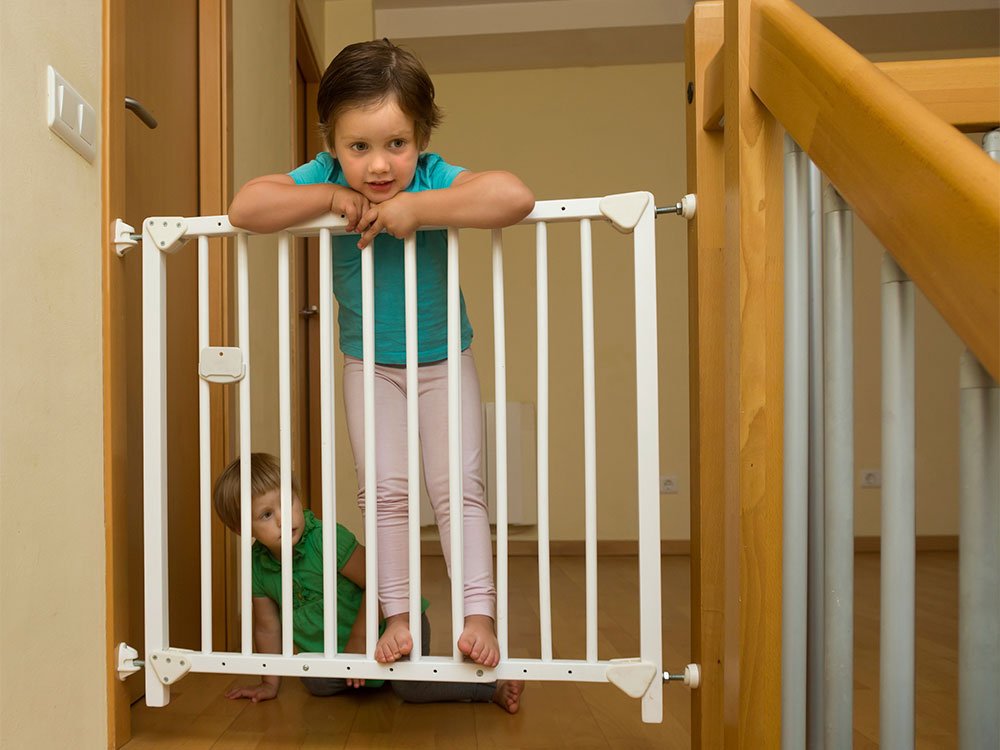
- Install safety gates at both the top and bottom
- Choose hardware-mounted gates for the top of stairs (pressure-mounted gates aren’t strong enough there)
- Keep stairways clear of clutter that could cause tripping, for kids and adults alike
For windows:
- Install window guards or stops, especially on upper floors
- Keep furniture away from windows to discourage climbing
- Secure blind cords well out of reach, tied up or wrapped
Choking Hazards and Small Object Awareness
This one’s less about installing anything and more about ongoing awareness, which honestly makes it harder to stay consistent about.
Common overlooked choking hazards:
- Coins, batteries (especially button batteries, which are genuinely dangerous if swallowed)
- Small toy parts, particularly from older siblings’ toys
- Certain foods — whole grapes, nuts, hard candy — cut or avoided depending on age
- Magnetic toys and desk items, another surprisingly serious risk category
[link to related guide on home safety devices and gadgets here]
Get-down-on-the-floor-and-look tends to be the best trick here. Adult eye level misses an enormous amount of what’s actually within a toddler’s reach.
Room-by-Room Childproofing Checklist
A quick reference to tie it all together:
- Kitchen: stove knobs, cabinet locks, sharp object storage
- Bathroom: water temperature, medication locks, non-slip mats
- Living room: furniture anchors, corner guards, cord management
- Bedrooms: crib safety, window guards, no loose bedding for infants
- Stairs: gates top and bottom, hardware-mounted at the top
- Garage/utility areas: locked storage for tools and chemicals, out of reach entirely
FAQ: Common Questions About How to Childproof Your Home
At what age should I start to childproof my home? Most parents start seriously childproofing around the time a baby begins rolling or crawling, typically 5-7 months, though some basics like medication storage are worth handling earlier.
What’s the most commonly missed childproofing item? Furniture anchoring tends to get overlooked most, even though tip-over injuries are a real and preventable risk once a child starts climbing.
Do I need to childproof every room, even ones my child rarely enters? Focus first on rooms with the highest traffic and highest risk — kitchen, bathroom, living room, and stairways. Rarely used rooms can usually wait, as long as doors stay closed.
Are pressure-mounted safety gates safe for the top of stairs? No, hardware-mounted gates are recommended for the top of stairs specifically, since pressure-mounted gates can give way under a determined push.
How do I childproof cabinets without expensive hardware? Basic child-safety latches are inexpensive and widely available, and they’re usually sufficient for cabinets containing anything hazardous like cleaning supplies or medications.
When can I start removing childproofing measures? This varies by child and item — many families keep stair gates and cabinet locks until around age 3-4, adjusting based on the specific child’s behavior and curiosity level.
Conclusion
A properly childproofed home isn’t about eliminating every possible risk — that’s not realistic, and it’ll drive you a little crazy trying. It’s about addressing the predictable ones: falls, choking hazards, unsecured furniture, and easy access to things that shouldn’t be touched. Start with the kitchen and stairs, since those tend to carry the highest risk, then work outward room by room.
Walk through your home this week at your child’s eye level, literally get down there. You’ll spot things a standing adult view simply misses.
Suggested image alt text:
- “Child safety cabinet lock installed on kitchen cabinet”
- “Hardware mounted safety gate at top of staircase”
- “Furniture anchor securing dresser to wall for child safety”